Construction Management
Building Materials Price Guide in Pakistan (2026): Cement, Steel, Bricks & Sand
2026-06-26 12:30:39
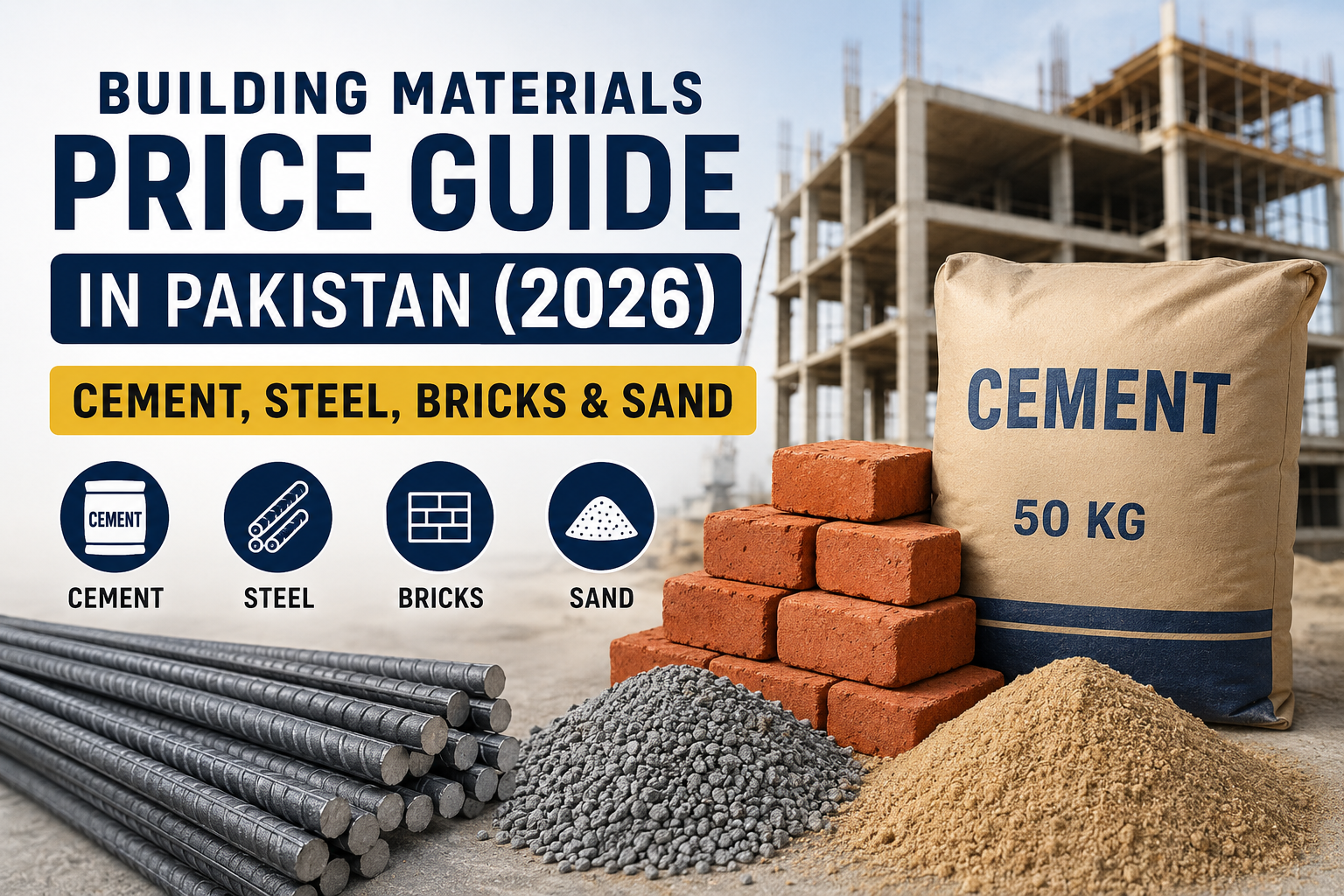
Planning to build a house, commercial plaza, or industrial project in Pakistan starts with understanding one critical factor: construction material prices. Whether you're a homeowner, builder, contractor, engineer, or real estate investor, keeping track of the latest material rates can help you estimate your budget accurately and avoid unexpected costs.
In this guide, we'll explore the average prices of the most commonly used construction materials in Pakistan during 2026, explain the factors that influence these prices, and share practical tips for purchasing quality materials at competitive rates.
Why Material Prices Matter
Construction materials typically account for 60–70% of a building's total construction cost. Even small fluctuations in cement or steel prices can significantly impact your overall budget.
Monitoring market prices allows you to:
- Prepare accurate project estimates.
- Reduce unnecessary expenses.
- Purchase materials at the right time.
- Compare suppliers before placing orders.
- Avoid low-quality or counterfeit products.
Average Building Material Prices in Pakistan (2026)
| Material | Average Price | Unit |
|---|---|---|
| Cement | PKR 1,350 – 1,550 | 50kg Bag |
| Steel (Grade 60) | PKR 260 – 285 | Per KG |
| Bricks (A-Class) | PKR 20 – 25 | Per Brick |
| Bricks (1,000) | PKR 20,000 – 25,000 | 1000 Bricks |
| Sand (Ravi/Chenab) | PKR 80 – 120 | Cubic Foot |
| Crush (Bajri) | PKR 120 – 200 | Cubic Foot |
Cement Prices in Pakistan
Cement is one of the most important construction materials, used in foundations, columns, slabs, plastering, flooring, and masonry work.
Popular cement brands include:
- Lucky Cement
- DG Cement
- Bestway Cement
- Maple Leaf Cement
- Fauji Cement
Average market prices in 2026 generally range between PKR 1,350 and PKR 1,550 per 50kg bag, depending on the manufacturer and region.
Factors Affecting Cement Prices
- Fuel and electricity costs
- Transportation charges
- Government taxes
- Seasonal construction demand
- Raw material availability
Steel (Saria) Prices in Pakistan
Steel reinforcement bars form the structural backbone of any building. Quality steel improves strength, durability, and earthquake resistance.
Average prices:
- Grade 40 Steel: PKR 255–270/kg
- Grade 60 Steel: PKR 260–285/kg
Well-known steel manufacturers include:
- Mughal Steel
- Amreli Steels
- FF Steel
- Ittefaq Steel
- AF Steel
Because steel represents a substantial portion of grey structure costs, even a modest increase in price can noticeably affect the total project budget.
Brick Prices in Pakistan
Bricks remain the preferred wall construction material throughout Pakistan.
Typical market rates:
| Brick Type | Average Price |
| A-Class Brick | PKR 20–25 |
| B-Class Brick | PKR 18–20 |
| Khangar Brick | PKR 15–18 |
For bulk purchases:
- 1,000 A-Class bricks: PKR 20,000–25,000
Prices differ by city, kiln quality, and transportation costs.
Sand Prices in Pakistan
Sand is used for concrete, plastering, flooring, and masonry.
Common varieties include:
- Ravi Sand
- Chenab Sand
- Lawrencepur Sand
- Ghazi Sand
Average market rates:
- PKR 80–120 per cubic foot
Premium-quality sand suitable for reinforced concrete may cost more.
Crush (Bajri) Prices
Crushed stone (bajri) is essential for reinforced concrete and foundations.
Average rates:
- PKR 120–200 per cubic foot
The final price depends on stone quality, size, quarry location, and transportation costs.
Why Material Prices Change
Several factors influence construction material prices in Pakistan:
- Inflation
- Exchange rate fluctuations
- Fuel and diesel prices
- Electricity tariffs
- Transportation costs
- Government taxes and duties
- Seasonal demand
- Local supply shortages
- Import policies
Tips Before Purchasing Building Materials
- Compare prices from multiple suppliers.
- Verify product quality and certifications.
- Buy from reputable dealers.
- Request official invoices.
- Purchase in bulk for better discounts.
- Store materials correctly to avoid damage.
- Hire experienced contractors for quality control.
Planning Your Construction Budget
When preparing your budget, don't consider material prices alone. Include:
- Labour charges
- Excavation
- Transportation
- Equipment rental
- Contingency expenses
- Finishing materials
- Electrical and plumbing work
A realistic budget helps reduce delays and prevents unexpected financial pressure.
Conclusion
Building material prices in Pakistan continue to fluctuate due to changing market conditions. Understanding the current rates of cement, steel, bricks, and sand enables homeowners, builders, and investors to make informed decisions and manage construction costs effectively.
Before starting your project, compare supplier quotations, verify material quality, and consult experienced professionals whenever possible. Proper planning today can save significant time and money throughout your construction journey.
Frequently Asked Questions (FAQs)
How much does a cement bag cost in Pakistan in 2026?
Most cement brands range between PKR 1,350 and PKR 1,550 per 50kg bag, depending on the manufacturer and location.
What is the average steel price in Pakistan?
Grade 60 reinforcement steel typically ranges from PKR 260 to PKR 285 per kilogram.
How much do 1,000 bricks cost?
A-Class bricks generally cost PKR 20,000 to PKR 25,000 per 1,000 bricks, depending on quality and city.
Do building material prices differ by city?
Yes. Prices vary due to transportation costs, supplier competition, local demand, and regional availability.
How can I reduce construction costs?
Plan your project carefully, compare supplier quotations, purchase in bulk when practical, choose quality materials, and work with experienced contractors.
 Chat on WhatsApp