Property Investment
Real Estate Scams in Pakistan: Common Frauds, 20 Years of Lessons and a Buyer-Safety Checklist
2026-07-28 16:54:17
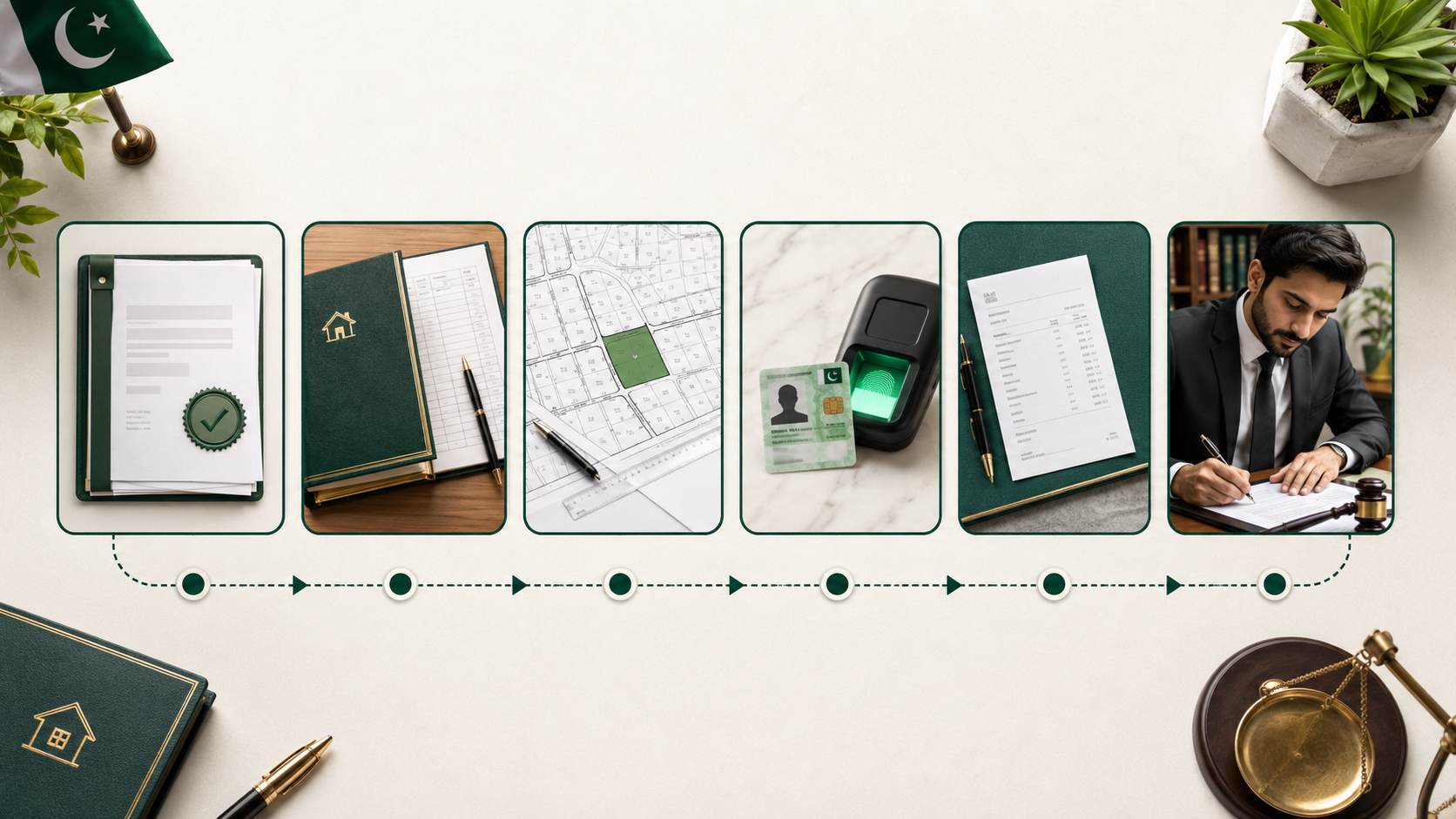
Property is often treated as one of the safest ways to preserve wealth in Pakistan. Families save for years to buy a plot, overseas Pakistanis invest their earnings from abroad, and retirees may place a large part of their life savings into land or a housing project.
That trust also makes real estate attractive to dishonest operators.
Over approximately the last two decades, the names, advertisements and payment methods have changed, but many fraud patterns have remained remarkably similar: land is marketed before approval, files are sold without a clearly identified plot, the same property is promised to more than one buyer, ownership records are misrepresented, or unusually high monthly returns are offered in the name of a property investment.
This article does not attempt to declare any particular developer, housing society or person guilty. A project may be approved, under process, disputed, investigated or declared illegal—these are different legal and regulatory positions. Buyers should always verify the current status directly with the responsible authority and obtain independent legal advice.
What counts as a real estate scam?
A real estate scam is any deliberate deception used to obtain money, property or a legal commitment from a buyer, seller, tenant or investor. It can involve false information about:
- Ownership of the land
- Approval or No Objection Certificate (NOC)
- Location or existence of a plot
- Development progress
- Transferability of a file or allotment
- Size, category or price of a property
- Expected rental income or investment return
- Identity or authority of the seller or agent
- Terms written in the booking or sale agreement
Not every delayed project is automatically a scam. Construction delays, litigation, regulatory changes and financing problems can occur without criminal intent. The danger increases when important facts are concealed, records are forged, approvals are falsely claimed, or money is collected through misleading promises.
Why the same fraud patterns keep returning
Pakistan’s real estate market is divided among development authorities, cooperative departments, revenue authorities, cantonment boards, local governments and project-specific management offices. A buyer may therefore need to verify several separate facts rather than relying on one certificate.
At the same time, property transactions can involve agents, sub-agents, file dealers, nominees and informal cash payments. This creates information gaps. Fraudsters exploit those gaps by manufacturing urgency, presenting impressive marketing material and discouraging independent verification.
Official warnings show that this is not merely a theoretical risk. The Capital Development Authority explains that private schemes in Islamabad pass through separate approval stages and that sponsors may begin development and plot sales only after obtaining the relevant NOC. The Lahore Development Authority maintains separate public lists of approved and illegal schemes. The Rawalpindi Development Authority likewise advises the public not to invest in illegal, fake or unapproved schemes. In February 2025, the Securities and Exchange Commission of Pakistan also warned about fraudulent real-estate investment arrangements promising unrealistic monthly returns.
The most common real estate scams in Pakistan
| Scam pattern | How it generally works | Warning signs | Essential verification |
| Unapproved housing scheme | Plots or files are marketed before the required authority has approved the project or issued its NOC. | “Approval is coming next week”; only a registration or application receipt is shown; heavy pre-launch discount. | Check the scheme directly on the relevant development authority’s official website and confirm the exact phase, extension and mouza. |
| Fake or misleading NOC claim | An unrelated, expired, partial or application-stage document is presented as full approval. | Blurred photocopy; missing reference number; approval belongs to another phase or company. | Obtain the reference number and verify it with the issuing authority—not only with the project office. |
| File without identified land | A buyer receives a booking or allocation file but cannot connect it to legally controlled land or a specific approved layout. | No plot number; no balloting timeline; vague location; repeated launch of new blocks. | Verify land title, approved layout, allocation rules and the issuer’s contractual liability. |
| Duplicate file or double sale | The same file, allotment or property is transferred or promised to multiple buyers. | Transfer happens outside the official office; original documents are unavailable; seller refuses biometric verification. | Confirm ownership and transfer status in the society/authority record on the same day as payment. |
| Forged ownership documents | Fake Fard, registry, mutation, allotment letter, power of attorney or identity documents are used. | Different spellings or CNIC numbers; overwriting; inconsistent stamps; seller avoids the record centre. | Verify land records through the applicable land-revenue authority and have originals examined by an independent lawyer. |
| Fake seller or unauthorized agent | Someone sells property they do not own or acts under a false, expired or limited authority. | Payment requested into a third party’s account; urgency; owner is “abroad” but cannot join verification. | Verify the owner’s identity, authority, CNIC and power of attorney; confirm its scope and validity. |
| Encumbered or disputed property | Mortgaged, inherited, jointly owned, stayed or litigated property is sold without full disclosure. | Price far below market; missing co-owner; unclear inheritance; refusal to provide a title search. | Conduct a title search and check mortgages, litigation, succession and co-owner consent. |
| Possession and development deception | Advertising suggests developed or possession-ready property although basic infrastructure or legal possession is absent. | Stock footage; carefully framed site visit; no demarcation; repeated revised delivery dates. | Visit the exact site, compare it with the approved plan and ask for written possession conditions. |
| Guaranteed-return or rental scam | Deposits are collected with promises of fixed, unusually high monthly profit supposedly supported by property. | “Risk-free” return; pressure to reinvest; payments made by bringing new investors; unclear underlying asset. | Verify the actual asset, contract, licensed structure and revenue source. Treat unrealistic guaranteed returns as a major warning. |
| Bait-and-switch | A desirable plot or unit is advertised, but the buyer is later pushed toward a different location, category or price. | The advertised unit is always “just sold”; verbal upgrades; additional unexplained charges. | Put the exact unit, size, location, price, schedule and refund terms in the signed agreement. |
| Hidden charges and one-sided terms | Development, utility, transfer, possession or escalation charges appear after booking. | Blank spaces; “charges as decided later”; non-refundable payment before agreement review. | Obtain the full schedule of charges and have the cancellation, refund and escalation clauses reviewed. |
| Overseas-buyer impersonation scam | Fraudsters use remote communication, copied documents or a false power of attorney to target overseas Pakistanis. | WhatsApp-only dealings; refusal of live identity checks; payment to personal accounts. | Use official portals, an independently selected lawyer and properly authenticated power-of-attorney procedures. |
| Illegal conversion or land use | Agricultural, amenity, public-use or otherwise restricted land is marketed for residential or commercial use. | No approved layout; roads and plots marked only on a marketing map; unusually cheap “farmhouse” offer. | Verify zoning, land use, layout approval and permissions with the competent authority. |
Twenty years of lessons—not a list of accusations
The most useful way to study the last 20 years is to examine how the fraud model evolved.
| Period | Common market behaviour | Buyer lesson |
| Mid-2000s | Paper records, informal dealers and cooperative-society files made independent verification difficult. | A stamped paper is not enough; confirm the underlying entry with the issuing office. |
| 2010–2015 | Rapid urban expansion encouraged aggressive pre-launch booking and speculative file trading. | Do not confuse a booking opportunity with ownership of an approved, deliverable plot. |
| 2016–2020 | Social media, property portals and polished digital advertising allowed projects to reach buyers nationwide. | Marketing reach is not regulatory approval. Verify every approval claim independently. |
| 2021–2024 | Overseas and remote investment increased; online transfers and WhatsApp documentation became routine. | Remote convenience must be matched with stronger identity, title and payment controls. |
| 2025 onward | Regulators increasingly publish online notices, while some schemes use company certificates or “investment plans” to appear legitimate. | Company incorporation does not itself authorize deposit-taking, guarantee a return or prove project approval. |
The constant lesson is simple: a professional office, celebrity endorsement, large social following, tax number, company incorporation certificate or expensive advertisement is not a substitute for title and regulatory verification.
The difference between company registration, project approval and property ownership
Buyers often treat three completely different things as if they were one.
| Document or status | What it can indicate | What it does not prove by itself |
| SECP company registration | A company has been incorporated under the applicable corporate framework. | That the company may collect public deposits, guarantee profits, owns the advertised land or has project approval. |
| Tax registration / NTN | A person or entity is registered for relevant tax purposes. | That a housing project is approved or an investment is safe. |
| Development-authority NOC | The relevant authority has issued a particular approval for the named scheme, subject to its scope and conditions. | Ownership of every advertised parcel, completion, profitability or absence of litigation. |
| Approved layout plan | A planning authority has accepted a particular layout for specified land. | That every marketed extension or block is covered, or that development is complete. |
| Fard / land record | Recorded rights or ownership information for identified land at the time of issuance. | Automatic proof that the seller can transfer a particular developed plot free of all disputes and encumbrances. |
| Allotment or allocation letter | A project or authority has recorded an allotment or contractual allocation. | Final title, possession, approval of the entire scheme or absence of duplicate claims. |
| Registry / sale deed | A documented sale transaction has been registered. | By itself, a complete title history or confirmation that no fraud, impersonation, stay or prior interest exists. |
Major red flags before buying a plot, file or apartment
Pause the transaction if you encounter any of the following:
- The agent says you must pay today to secure the price.
- Approval is described as “under process” but advertising says “NOC approved.”
- The NOC does not identify the exact phase, block, extension or land being sold.
- The seller will not meet at the society office or relevant record centre.
- Payment is requested in cash or into an employee’s, agent’s or unrelated person’s account.
- The original allotment, transfer or title documents are unavailable.
- The price is significantly below comparable properties without a credible reason.
- The plot appears on a marketing map but not on the approved layout.
- A fixed monthly profit is described as guaranteed and risk-free.
- Blank forms, undated cheques or incomplete agreements must be signed.
- Refund terms are verbal, unclear or entirely controlled by the seller.
- The seller discourages you from hiring your own lawyer.
- Site access is restricted or you are shown a general area instead of the exact plot.
- Development charges and delivery dates are not stated in writing.
- The company certificate is presented as proof that the investment itself is approved.
Property verification checklist
Complete each of these stages before making a substantial payment.
1. Identify the correct regulator
Find which authority controls planning and approval in the project’s exact location. Depending on the area, this may be a development authority, cantonment board, cooperative department, local government, building-control authority or another statutory body.
Do not assume that an approval by one department replaces every other required approval.
2. Verify the exact approval status
Check the official website, public notice or office record. Match:
- Project’s complete legal name
- Sponsor or developer’s legal name
- Phase, extension and block
- Mouza and land area
- NOC or approval reference number
- Approved layout plan
- Current status and any suspension, cancellation or show-cause notice
In Islamabad, the CDA states that approval of a layout plan and issuance of an NOC are separate stages. This distinction matters: an application, provisional step or approved layout should not automatically be represented as unrestricted permission to market and sell.
3. Confirm ownership and title
For land-record property, obtain a fresh ownership record through the applicable provincial authority or record centre. In Punjab, PLRA provides official land-record services, including Fard and mutation-related services.
Your lawyer should examine:
- Chain of title
- Current recorded owner
- Khasra, khewat, khatooni or other relevant identifiers
- Mutation and registry history
- Mortgages and charges
- Court cases or stay orders
- Inheritance and co-ownership
- Power of attorney
- Whether the project controls enough land for the advertised plan
4. Verify the seller and authority to sell
Match the seller’s CNIC and identity with the ownership or allotment record. If a representative is acting under a power of attorney, confirm:
- The document is authentic and currently valid
- It covers the specific property and proposed transaction
- It has not been revoked
- Any required authentication or registration has been completed
- The principal is alive and legally competent where relevant
5. Verify the exact plot or unit
A file, allocation and physically demarcated plot are not necessarily the same thing. Confirm:
- Plot or unit number
- Block, phase and category
- Dimensions and total area
- Balloted or unballoted status
- Possession status
- Location on the approved map
- Whether it falls on a road, park, graveyard, utility area, watercourse or other reserved land
- Whether it has been transferred, cancelled, mortgaged or duplicated
6. Inspect the location physically
Visit the site in daylight. Take the approved map and verify access roads, plot markers, development and surrounding land. Speak with more than one existing buyer or resident.
Drone videos, model homes and general development footage should not replace inspection of the exact block or parcel.
7. Review the agreement independently
The developer’s or seller’s documentation protects their interests first. Ask an independent property lawyer to review:
- Total price and payment schedule
- Taxes, transfer fees and development charges
- Escalation clauses
- Delivery and possession date
- Default and late-payment consequences
- Cancellation and refund formula
- Dispute-resolution forum
- Developer’s right to change the unit or plan
- Buyer’s transfer and resale rights
- What happens if approval or development does not proceed
8. Create a traceable payment trail
Pay only to the legally identified seller or company account stated in the agreement. Use banking channels and obtain an official, verifiable receipt containing:
- Payer and recipient names
- CNIC or company identifier where appropriate
- Property/file/unit details
- Amount, date and payment purpose
- Instrument or transaction reference
- Authorized signature and receipt number
Avoid undocumented cash payments. Never treat a WhatsApp acknowledgment as the only payment evidence.
9. Recheck immediately before transfer
Verification done weeks earlier may no longer reflect the current record. On the transfer date, reconfirm ownership, file status, outstanding dues, transfer restrictions and identity before releasing the balance.
10. Preserve every record
Keep advertisements, brochures, payment receipts, emails, messages, voice notes, contracts, NOC copies, maps and identity documents. These may be important if the representation later changes or a complaint becomes necessary.
A practical verification table for buyers
| Check | Ask for | Verify with | Do not rely only on |
| Project legality | NOC and approved layout reference | Relevant development/building authority | Dealer’s screenshot or billboard |
| Land ownership | Fresh land record and title chain | Provincial land authority/record centre and lawyer | Photocopy supplied by seller |
| Seller identity | Original CNIC and authority to sell | Ownership record, issuing office and biometric process | WhatsApp profile or business card |
| Plot existence | Plot number and official map | Society/authority record and physical site | Marketing map |
| File authenticity | Original file and transfer history | Issuing society/authority office | Agent’s ledger |
| Dues and charges | Official statement of account | Project or authority accounts office | Verbal estimate |
| Development status | Written timeline and site access | Physical inspection and official plan | Edited videos |
| Investment return | Asset, contract and lawful structure | Independent lawyer/financial adviser and relevant regulator | “Guaranteed profit” promise |
| Payment | Company/seller bank details and official receipt | Written agreement and bank trail | Cash receipt from agent |
Extra precautions for overseas Pakistanis
Overseas buyers are especially vulnerable because distance makes site inspection and record verification harder.
- Select your own lawyer; do not depend only on the agent’s lawyer.
- Use official land-record and regulatory portals where available.
- Arrange live video verification from the authority or project office.
- Do not send money solely on the basis of scanned documents.
- Verify bank-account ownership before transfer.
- Use a properly prepared and authenticated power of attorney when required.
- Ask a trusted independent person to visit the exact site.
- Keep control of your registered email, phone number and account credentials.
- Require written confirmation after every transfer or record change.
What to do if you suspect property fraud
Act quickly but preserve evidence before confronting anyone.
- Stop further payments.
- Download and back up all messages, advertisements and receipts.
- Obtain certified or official copies of the relevant property and project records.
- Ask a qualified lawyer to assess civil, criminal and regulatory options.
- Notify your bank immediately if a transfer was recent or unauthorized.
- File a complaint with the relevant development authority or housing regulator.
- Where facts justify it, report the matter to the appropriate police, cybercrime or accountability body.
- If the issue involves unauthorized investment solicitation or misuse of a company’s registration status, review SECP guidance and complaint channels.
- Avoid making public accusations that go beyond your evidence; doing so can complicate the dispute.
The correct forum depends on the property, location, transaction and conduct involved. A development authority may address project approval, while land-revenue offices address ownership records and courts determine private rights and remedies.
Official resources for verification
Statuses can change, so buyers should revisit the relevant source immediately before transacting.
| Area or purpose | Official resource |
| Islamabad housing schemes | CDA illegal housing schemes and CDA public notices |
| Lahore housing schemes | LDA approved schemes and LDA illegal schemes |
| Rawalpindi housing schemes | RDA private housing schemes and RDA scam advisory |
| Karachi building/public-sale projects | Sindh Building Control Authority |
| Punjab land records | Punjab Land Records Authority and Online Fard portal |
| Suspicious investment/deposit schemes | SECP warning on fraudulent real-estate investment schemes |
| Accountability complaint | NAB online complaint portal |
This list is not exhaustive. Use the authority responsible for the property’s exact jurisdiction.
Frequently asked questions
How can I check whether a housing society is legal in Pakistan?
Identify the authority responsible for the project’s location, then check its official approved-scheme list, illegal-scheme list and current public notices. Confirm the exact legal name, phase, extension, sponsor, mouza and NOC reference. Do not treat “NOC applied for” as “NOC approved.”
Is an SECP-registered real estate company automatically safe?
No. Company incorporation confirms the existence of a registered corporate entity; it does not by itself prove that a specific housing project is approved, that the company owns the advertised land, or that it may accept deposits and guarantee returns. SECP has specifically warned the public not to treat incorporation documents as authorization for fraudulent investment-taking.
Is buying a plot file safe?
A file can represent a contractual or allocation right, but it may not be a physically identified, approved or possession-ready plot. Safety depends on the issuer, approval status, underlying land, contractual terms, transfer record and ability to deliver. Verify all of these before purchasing.
What is the biggest warning sign in a property deal?
Pressure to pay before independent verification is one of the strongest warning signs. Other major red flags include an approval “under process,” payment to an unrelated personal account, refusal to show originals and guaranteed returns substantially above normal market expectations.
Can a registered sale deed still be disputed?
Yes. Registration is important, but disputes can still arise from impersonation, prior ownership claims, inheritance, fraud, mortgages, court orders or defects in the title chain. Obtain an independent title review.
How do overseas Pakistanis verify property?
They should use official portals, hire an independently selected lawyer, verify the seller and bank account, arrange physical inspection through a trusted person and use properly authenticated power-of-attorney procedures where necessary.
Where should a property scam be reported?
The correct authority depends on the issue. Possible forums include the relevant development or building authority, provincial land-record office, police, cybercrime authority, SECP, NAB or a civil/criminal court. Seek legal advice for the facts of the case.
Final takeaway
Most property fraud does not begin with an obviously fake document. It begins with trust, urgency and one unchecked assumption.
Before buying any plot, file, apartment or investment plan in Pakistan, independently verify four things:
- The project is legally approved for what is being sold.
- The seller has a valid and transferable right.
- The exact property exists and matches the official record.
- The agreement and payment trail protect the buyer.
A few days of verification may feel slow when an agent claims that prices will rise tomorrow. Losing years of savings is slower.
Disclaimer: This article is for general educational and consumer-awareness purposes. It does not constitute legal, financial or investment advice and does not make findings against any person or project. Regulatory and property statuses can change. Verify current records with the competent authority and consult qualified professionals before transacting.
 Chat on WhatsApp