General
How to Protect Your House from Monsoon Damage in Pakistan: Roof, Foundation and Drainage Safety Guide
2026-08-01 18:09:15
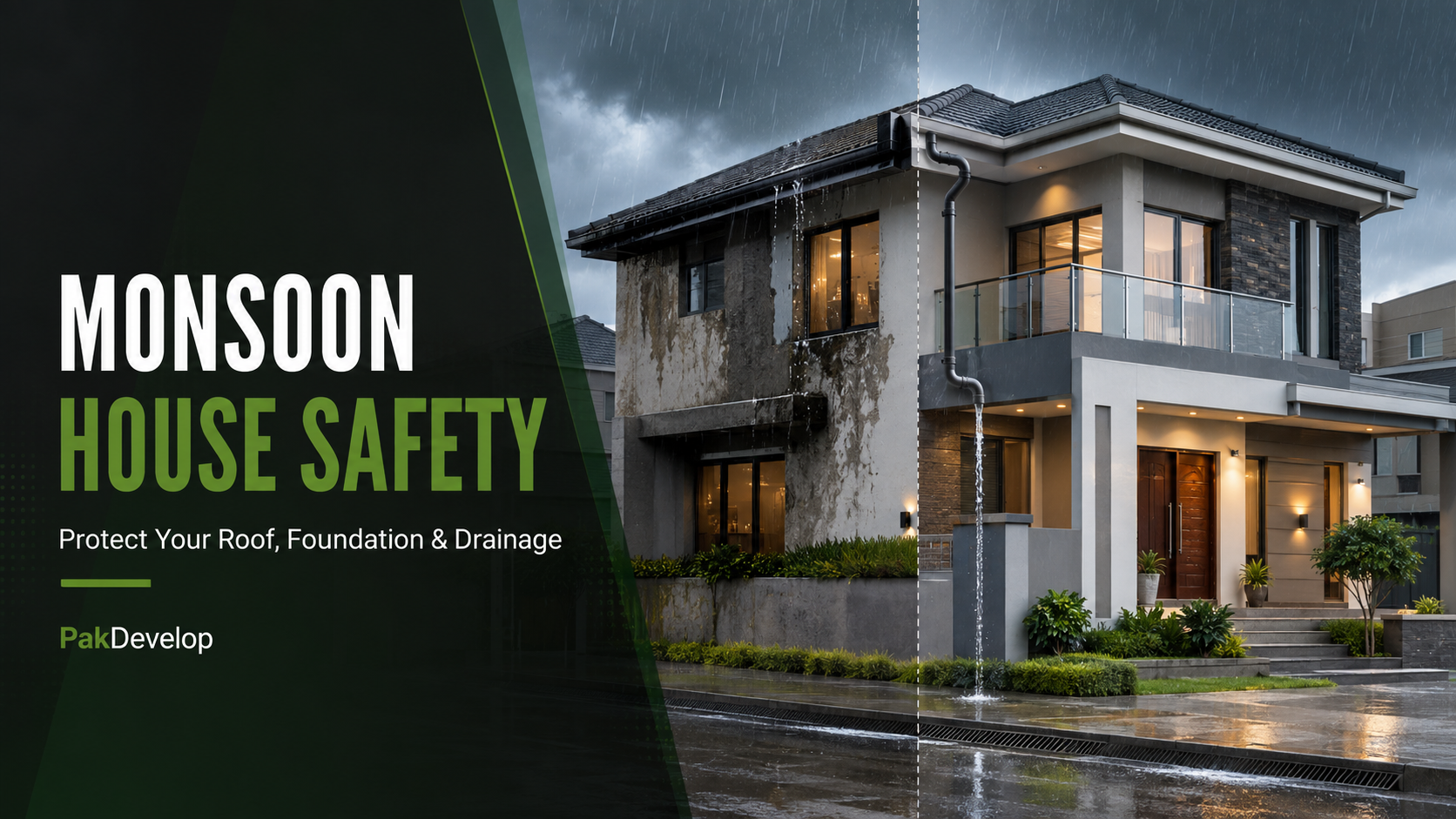
Pakistan’s monsoon season provides much-needed rainfall, but it can also expose serious weaknesses in houses and other buildings. Continuous rain, blocked drains, leaking roofs and water accumulating around foundations can result in expensive property damage—and sometimes dangerous structural failures.
Recent heavy rainfall has caused flooding and building collapses in different parts of Pakistan. Many of these incidents involve old, poorly maintained or structurally weak buildings. Therefore, homeowners should inspect their properties before and during the monsoon instead of waiting for visible damage to become a serious emergency.
This guide explains how you can protect your roof, walls, foundation, basement, drainage and electrical system during Pakistan’s monsoon season.
1. Inspect the Roof Before Heavy Rain
The roof is usually the first part of a house affected by monsoon rainfall. Even a small crack can allow water to enter the concrete slab and damage the ceiling, paint and electrical wiring.
Before heavy rain arrives, inspect your roof for:
- Cracks in the concrete surface
- Broken or loose tiles
- Damaged waterproofing layers
- Standing water after rainfall
- Blocked rainwater pipes
- Gaps around water tanks and pipes
- Damp patches on the ceiling below
Small cracks should be repaired with an appropriate crack filler or waterproofing material. Larger or recurring cracks must be inspected by a qualified construction professional.
Avoid covering serious structural cracks with cement or paint without identifying their actual cause.
2. Keep Roof Drains and Gutters Clear
Blocked drains are one of the most common causes of roof leakage. Leaves, plastic bags, mud and other debris can prevent rainwater from leaving the roof.
When water remains on a concrete roof for a long time, it can gradually enter small cracks and weaken the surface. It can also increase the load placed on the roof.
Clean all roof drains and gutters before every major monsoon spell. After heavy rainfall, check whether water is flowing freely through the pipes.
The roof should have a proper slope so that water moves toward the drainage points instead of collecting in the middle.
3. Apply Suitable Roof Waterproofing
Waterproofing creates a protective barrier that prevents rainwater from penetrating the roof. Common waterproofing options available in Pakistan include:
- Cementitious waterproofing
- Acrylic waterproof coatings
- Bituminous membrane sheets
- Polyurethane coatings
- Roof heat-proofing and waterproofing combinations
- Chemical treatments for minor cracks
The correct system depends on the roof’s condition, construction material and available budget. A coating that works for a small residential roof may not be suitable for an old or badly cracked building.
Ask an experienced waterproofing contractor to inspect the roof before selecting a treatment. Waterproofing should be applied to a clean and properly prepared surface.
4. Check Walls for Cracks and Dampness
Rainwater can enter a building through exterior walls, window edges, pipe openings and damaged plaster.
Common warning signs include:
- Peeling or bubbling paint
- Dark patches on walls
- White powder-like deposits
- Musty smells inside rooms
- Dampness around windows
- Expanding cracks after rainfall
- Plaster separating from the wall
Minor surface cracks can usually be sealed after cleaning and preparing the affected area. However, diagonal, horizontal or rapidly growing cracks may indicate structural movement.
Do not ignore cracks near columns, beams, doors or windows. Arrange an inspection by a civil engineer or qualified building professional if a crack appears serious.
5. Protect the Foundation from Standing Water
Water collecting next to a house can enter the soil surrounding its foundation. Over time, this may cause settlement, dampness, erosion or movement in the structure.
To protect the foundation:
- Direct roof water away from the building
- Repair leaking underground water pipes
- Maintain a slope away from exterior walls
- Keep street and courtyard drains clear
- Seal gaps where pipes enter the building
- Avoid allowing water to remain beside boundary walls
- Repair damaged exterior paving
If you notice new cracks, sinking floors or doors that suddenly stop closing properly after heavy rain, consult a structural engineer.
These signs can sometimes indicate foundation movement and should not be treated only as cosmetic problems.
6. Improve Rainwater Drainage
A reliable drainage system is essential for monsoon protection. Rainwater should leave the property without entering rooms, basements or foundations.
Inspect:
- Roof drainage pipes
- Courtyard drains
- Street-facing outlets
- Balcony drainage points
- Basement pumps
- Sewer connections
- Driveway slopes
Install drain covers to stop solid waste from entering the pipes. However, the covers must also allow enough water to pass during heavy rain.
If your street frequently floods, consider installing raised entrance barriers, non-return valves or a properly designed sump-pump system.
7. Prevent Basement Flooding
Basements are especially vulnerable because they are below ground level. Water can enter through doors, windows, walls, floor joints and sewer lines.
You can reduce the risk by:
- Waterproofing external basement walls
- Sealing cracks and construction joints
- Installing a sump pit and automatic pump
- Keeping important items above floor level
- Checking the pump before the monsoon
- Providing backup electricity for the pump
- Installing a non-return valve where appropriate
Never enter a flooded basement if electrical power is still connected. Switch off the electricity from a safe location and contact trained professionals.
8. Protect the Electrical System
Water and electricity create a life-threatening combination. Roof leakage, damp walls and flooding may expose electrical cables, sockets and appliances to moisture.
During the monsoon:
- Keep extension boards away from the floor
- Do not touch wet switches or appliances
- Replace damaged or exposed wiring
- Protect exterior sockets from rain
- Install proper circuit breakers
- Switch off affected circuits when leakage occurs
- Ask a qualified electrician to inspect damp areas
Do not attempt electrical repairs while standing in water or touching a wet surface.
9. Secure Water Tanks and Rooftop Structures
Water tanks, solar panels, shades, signboards and other rooftop installations should be securely fixed. Strong winds accompanying monsoon storms can loosen poorly installed structures.
Check that:
- Water tanks have stable bases
- Solar-panel frames are properly anchored
- Metal shades are securely attached
- Loose bricks and construction materials are removed
- Parapet walls are not cracked or unstable
The roof should not be overloaded with unnecessary construction materials, particularly when rainwater is already accumulating on its surface.
10. Protect an Under-Construction House
An unfinished building is more exposed to rainfall because its roof, drainage, doors and windows may not be complete.
Contractors should:
- Cover cement and other moisture-sensitive materials
- Store steel above wet ground
- Protect open electrical connections
- Pump water out of excavations
- Support temporary walls and structures
- Cover recently completed concrete work appropriately
- Stop unsafe work during severe rain or lightning
- Inspect scaffolding after strong winds
Excavated soil can collapse after becoming saturated. Workers should not enter an unsupported excavation filled or weakened by rainwater.
Warning Signs That Require Immediate Attention
Leave the affected area and contact a qualified professional if you notice:
- A roof or ceiling beginning to bend
- Concrete pieces falling from the ceiling
- Steel reinforcement becoming visible
- Large cracks appearing suddenly
- Walls leaning or separating
- Floors sinking or becoming uneven
- Doors and windows suddenly becoming stuck
- Unusual cracking sounds
- Water entering electrical fittings
- A boundary wall becoming unstable
If a building appears unsafe, do not remain inside merely to protect furniture or other belongings. Human safety must always come first.
Monsoon Home-Safety Checklist
Use this short checklist before and during heavy rainfall:
- Clean all roof drains and gutters
- Repair roof and exterior-wall cracks
- Inspect waterproofing
- Remove standing water
- Check basement pumps
- Secure rooftop installations
- Test circuit breakers
- Keep emergency lights charged
- Move valuable items above floor level
- Save emergency contact numbers
- Arrange a professional inspection when necessary
When Should You Hire a Structural Engineer?
You should consider a structural inspection if your house is old, has experienced flooding, contains large cracks or has undergone construction changes without professional supervision.
A structural engineer can examine the foundation, columns, beams, roof slab and load-bearing walls. This is different from a general repair worker who may only cover visible cracks.
Professional inspection can identify the cause of the damage and help prevent unnecessary or ineffective repairs.
Final Thoughts
Monsoon damage usually becomes more expensive when early warning signs are ignored. Cleaning drains, repairing cracks, improving water flow and arranging timely inspections can protect both your property and the people living inside it.
Homeowners should treat recurring leaks, growing cracks and standing water as warning signs rather than normal seasonal problems.
PakDevelop helps property owners discover construction companies, engineers, waterproofing specialists and skilled workers across Pakistan. Compare available professionals and choose the right service provider for your inspection or repair requirements.
Safety notice: This article provides general information only. Serious cracks, structural movement, electrical hazards and unstable buildings should always be inspected by qualified professionals.
 Chat on WhatsApp