Infrastructure Development
Building the Foundation for a Stronger Future
2026-06-21 05:47:39
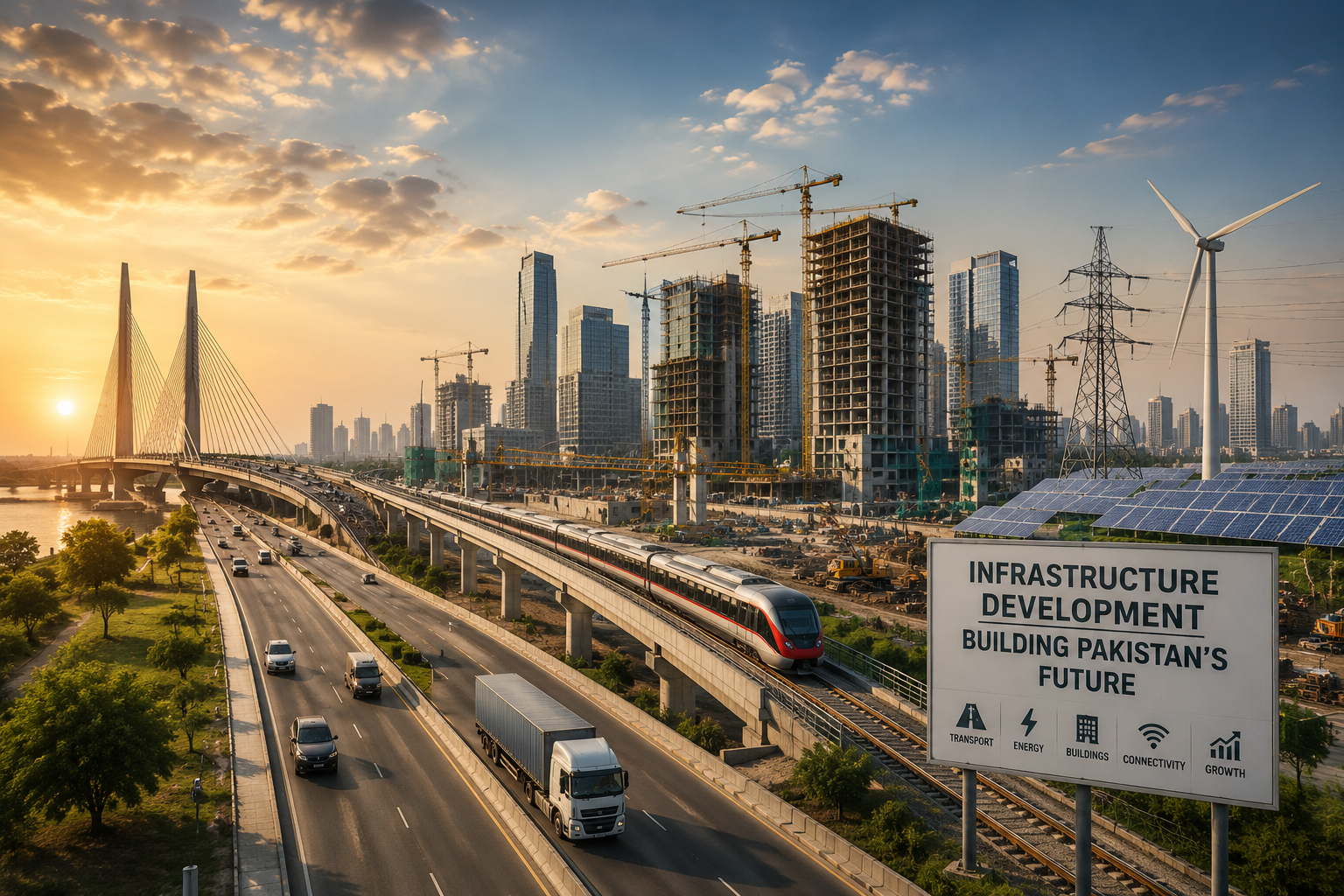
Infrastructure Development in Pakistan (2026): Projects, Opportunities & Future Growth
Infrastructure is the foundation of every modern economy. Highways, bridges, railways, airports, energy systems, water networks, and digital connectivity enable businesses to operate efficiently and improve the quality of life for millions of people.
Pakistan is experiencing continuous infrastructure modernization through government initiatives, public-private partnerships, and private sector investments. From transportation corridors to renewable energy projects, these developments are strengthening economic growth and creating new business opportunities.
Why Infrastructure Development Matters
Infrastructure investment has a direct impact on national productivity and economic competitiveness.
| Benefit | Impact |
|---|---|
| Economic Growth | Increases GDP and industrial output |
| Employment | Creates thousands of skilled and unskilled jobs |
| Trade | Improves domestic and international logistics |
| Investment | Attracts local and foreign investors |
| Urban Development | Supports smart cities and housing projects |
| Technology | Enables digital transformation |
Major Infrastructure Sectors in Pakistan
1. Transportation Infrastructure
Pakistan has significantly expanded its road network, connecting major cities and industrial zones.
| Infrastructure | Importance |
|---|---|
| Motorways | Faster intercity transportation |
| National Highways | Better logistics movement |
| Bridges | Improved regional connectivity |
| Rail Networks | Cost-effective freight transport |
| Airports | International business connectivity |
| Metro Systems | Urban mobility improvements |
Benefits
- Reduced transportation costs
- Faster supply chains
- Better regional trade
- Improved access to remote areas
2. Energy Infrastructure
Reliable energy is essential for industries, hospitals, businesses, and households.
| Energy Source | Current Importance |
|---|---|
| Hydropower | Renewable electricity generation |
| Solar Energy | Growing sustainable investment |
| Wind Energy | Clean power production |
| LNG Plants | Industrial energy support |
| Grid Expansion | Improved nationwide distribution |
Advantages
- Supports industrial growth
- Reduces power shortages
- Encourages renewable energy adoption
- Attracts manufacturing investment
3. Urban Infrastructure
Rapid urbanization requires better planning and modern public services.
| Infrastructure Area | Purpose |
|---|---|
| Housing Projects | Population accommodation |
| Water Supply | Public health improvement |
| Sewerage Systems | Environmental protection |
| Public Parks | Better urban living |
| Smart Traffic Systems | Reduced congestion |
| Waste Management | Sustainable cities |
4. Digital Infrastructure
Today's economy depends on digital connectivity as much as physical infrastructure.
| Digital Asset | Business Benefit |
|---|---|
| Fiber Internet | High-speed communication |
| Data Centers | Cloud computing services |
| Smart Cities | Digital governance |
| AI Systems | Better decision making |
| Cloud Platforms | Business scalability |
| Cybersecurity | Data protection |
Digital infrastructure is becoming one of Pakistan's fastest-growing sectors and is essential for technology companies, startups, and SaaS businesses.
Infrastructure Investment Opportunities
Several industries benefit directly from infrastructure expansion.
| Sector | Opportunity |
|---|---|
| Construction | Commercial and residential projects |
| Real Estate | Property value appreciation |
| Technology | Smart city solutions |
| Renewable Energy | Solar and wind investments |
| Logistics | Warehousing and transportation |
| Manufacturing | Industrial expansion |
Common Challenges
Despite significant progress, Pakistan still faces infrastructure-related challenges.
| Challenge | Possible Solution |
|---|---|
| Population Growth | Smart urban planning |
| Funding Constraints | Public-private partnerships |
| Traffic Congestion | Mass transit systems |
| Climate Change | Sustainable construction |
| Water Management | Modern infrastructure investment |
| Project Delays | Better project management |
Emerging Trends
Modern infrastructure is evolving rapidly.
| Trend | Future Impact |
|---|---|
| Smart Cities | Digital public services |
| Green Buildings | Lower environmental impact |
| AI Project Management | Better efficiency |
| BIM Technology | Improved construction planning |
| Renewable Energy | Sustainable growth |
| IoT Infrastructure | Connected urban systems |
Why Businesses Should Care
Infrastructure development benefits businesses in multiple ways:
| Business Type | Major Benefit |
|---|---|
| Construction Companies | More project opportunities |
| Software Companies | Smart infrastructure solutions |
| Logistics Firms | Faster deliveries |
| Manufacturers | Reduced operating costs |
| Real Estate Developers | Higher property demand |
| Investors | Long-term capital growth |
Pakistan's Competitive Advantages
Pakistan has several strengths that support long-term infrastructure growth.
| Strength | Business Impact |
|---|---|
| Strategic Location | Regional trade hub |
| Young Workforce | Large labor market |
| Growing Cities | Rising infrastructure demand |
| Digital Adoption | Technology expansion |
| Construction Sector | Continuous development |
| Investment Potential | Long-term opportunities |
Best Practices for Sustainable Infrastructure
Modern projects should focus on sustainability and efficiency.
- Use energy-efficient building materials
- Integrate renewable energy sources
- Implement smart traffic management
- Improve water conservation systems
- Adopt digital project management tools
- Follow international safety standards
Conclusion
Infrastructure development is shaping Pakistan's economic future by improving transportation, energy, urban planning, and digital connectivity. These investments not only create employment and strengthen industries but also position the country for sustainable long-term growth.
For construction companies, investors, technology providers, and businesses, infrastructure remains one of the most promising sectors in Pakistan. Organizations that embrace innovation, sustainability, and modern project management will be well-positioned to benefit from the country's ongoing transformation.
 Chat on WhatsApp