Investment in Pakistan: Where to Put Your Money in 2026

2026-06-18 18:05:03
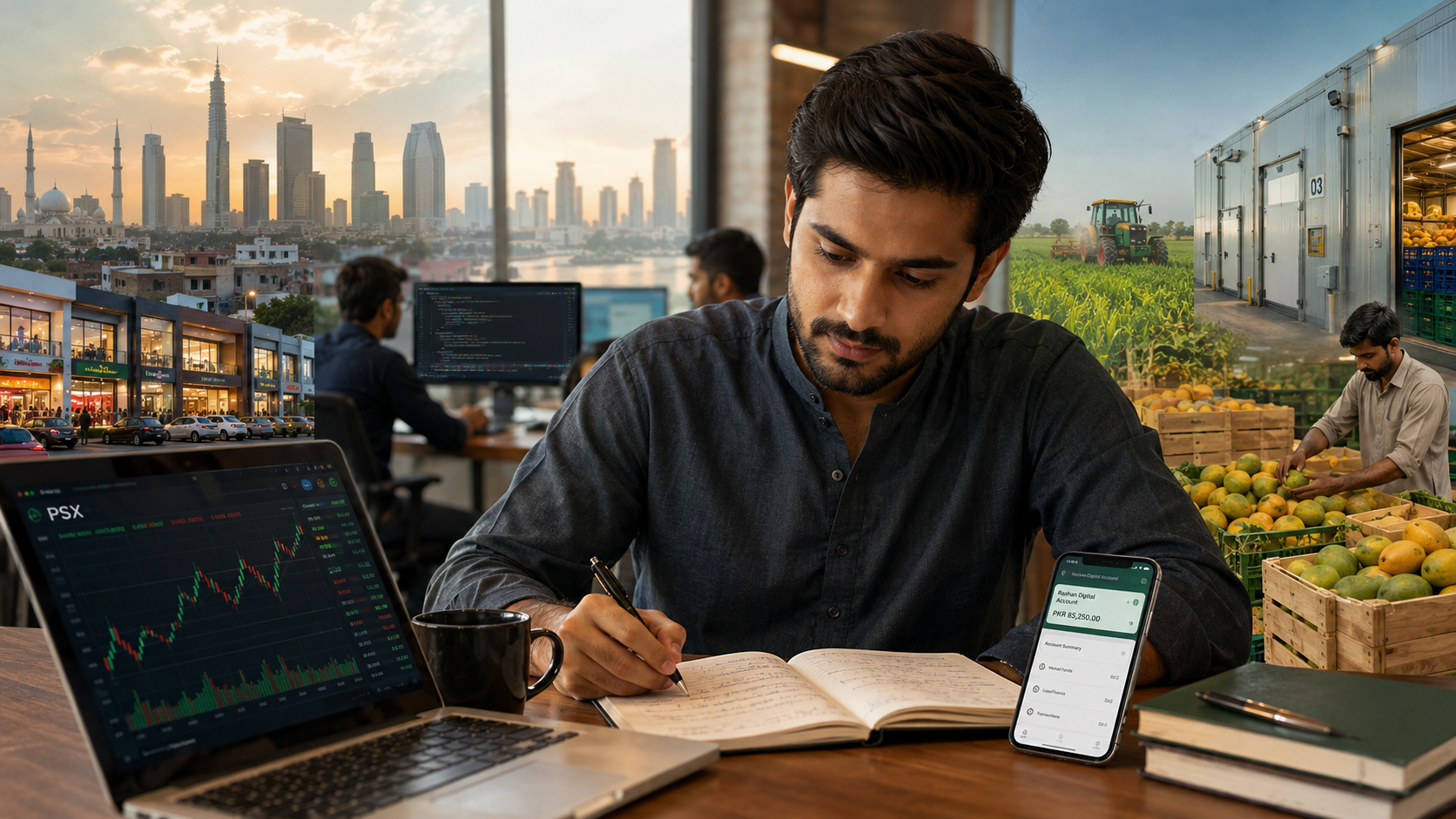
Investment in Pakistan: Where to Put Your Money in 2026

Investment in Pakistan: Where to Put Your Money in 2026


So you've got some money saved up. Maybe not a lot. Maybe a decent amount. Either way, you're looking at it and thinking — this thing is just sitting here. Bank interest isn't covering inflation. Gold is at record highs and feels risky to jump into now. Real estate? Everyone's got an opinion, half of them scary.


Kya karein?


I've been there. Most of us have. Pakistan's economy has been a wild ride the last few years and honestly, it's exhausting trying to keep up. But here's something I've learned the hard way: the worst time to make investment decisions is when you're panicking. And the second worst time is when everyone around you is euphoric. The sweet spot is somewhere in the middle, when nobody's really sure what's going to happen next. Which is... basically always, in Pakistan.


Anyway, let's talk.


The stock market.


Okay look. The PSX has burned a lot of people. If you put your life savings in right before the 2017 crash, you probably still flinch when someone mentions the KSE-100. I get it. But here's what's interesting — if you had just put in a little bit every month since then, through the crashes and the recoveries and the crashes again, you'd be up. Not massively, but up. And those dividends? Some companies have been paying them for 30, 40 years without missing a single year.


Think about that. Through every government, every crisis, every time someone said Pakistan was finished. They just kept paying.


I'm not saying go all in. I'm saying if you pick solid names — the ones that have been around forever, the ones your dad probably owned shares in — and you stick with them for 5-7 years, it's hard to lose. OGDC, MCB, ENGRO, LUCK. Boring names. But boring names pay the bills.


Real estate though.


Everyone's chacha is a real estate expert in this country. I swear.


Look, real estate still works. It just doesn't work the way it used to. You can't throw money at any housing scheme and hope for the best anymore. Too many people got hurt that way. But if you're smart about it — buy something you can actually see, in a location that's growing, with your own money or very manageable debt — it's still one of the best ways to build wealth here.


What I've noticed working lately: small commercial units in newer sectors. A tiny shop or office. The rental income alone can be decent. And over time, the capital appreciation follows. Apartments too, if you're in a city where people actually want to rent. Karachi's DHA, Lahore's Gulberg, Islamabad's growing sectors.


One thing I'll never do again: buy something I haven't visited. Learned that lesson. Aankhen band karke paisa nahi lagana chahiye. Ever.


The tech thing.


This is where I get excited.


Pakistan's IT sector is quietly doing something amazing. $3 billion plus in exports, growing fast, and it's not because of some government scheme. It's because thousands of young Pakistanis sat down, learned skills online, and started selling their work to people in other countries. No connections needed. No sifarish. Just ability.


I know a guy in Gujranwala — Gujranwala, not Karachi or Lahore — who runs a software agency with 20 people. Clients in Texas. Pays his team well. They work from home, avoid traffic, and earn more than most office workers in the country. That story is being repeated thousands of times across Pakistan.


For investors, the opportunity isn't just in startups (though some of them are doing interesting things). It's in the ecosystem itself. Support services, training, co-working, payment solutions. Everything around the core tech industry is underbuilt and needs capital.


Or honestly? Just start something yourself. A small e-commerce store. A service business. The tools are free or cheap. The market is huge. Apna phone uthao, dekh lo kya ho sakta hai.


And agriculture.


Nobody ever talks about this at dinner parties. But it's massive.


Pakistan produces incredible rice, wheat, mangoes, cotton. Some of the best in the world. And then we let a third of it rot because we don't have proper storage or cold chains or processing facilities. That rot is literally money decomposing on the ground.


There are people now building cold storage units, setting up processing plants, using drones and sensors to help farmers grow more with less. It's not glamorous. You won't get invited to cool events. But the returns? Solid.


CPEC phase two is focusing on agriculture too. When the Chinese start putting money into a sector, it's worth paying attention.


For Pakistanis abroad.


If you're reading this from outside the country, you have an advantage you might not fully appreciate.


The Roshan Digital Account thing? It actually works. I know people who've used it. You can buy shares, buy property, buy government bonds — all from your phone. No trips to the bank, no kal aayein treatment, no sitting in a waiting room for two hours.


And with the exchange rate where it is, your foreign currency buys more local assets than it did a few years ago. A rental property yielding 10% in rupees could be 15% or more in dollars over time if the trend continues. That math works.


Ok, real talk.


I'm not here to tell you Pakistan is a perfect place to invest. It's messy. Stuff changes overnight. You'll have days where you question every financial decision you've ever made.


But here's the thing nobody tells you in those doom-and-gloom articles: this country has 240 million people, more than half of them under 30, and they're hustling harder than almost anywhere else in the world. That energy has to go somewhere.


The people I know who've done well here — not the lucky ones, the ones who genuinely built wealth — they all did variations of the same thing: they bought when everyone was scared, held when everyone was selling, and stayed patient when nothing was happening.


Diversify. Don't put everything in one basket. Stay away from anything that promises guaranteed monthly returns. If it sounds too good to be true in Pakistan, it absolutely is.


And trust your instincts. You know more than you think.